Why College Education Does not Teach the Latest Technologies
Technology in School
January 13, 2025 • Experience
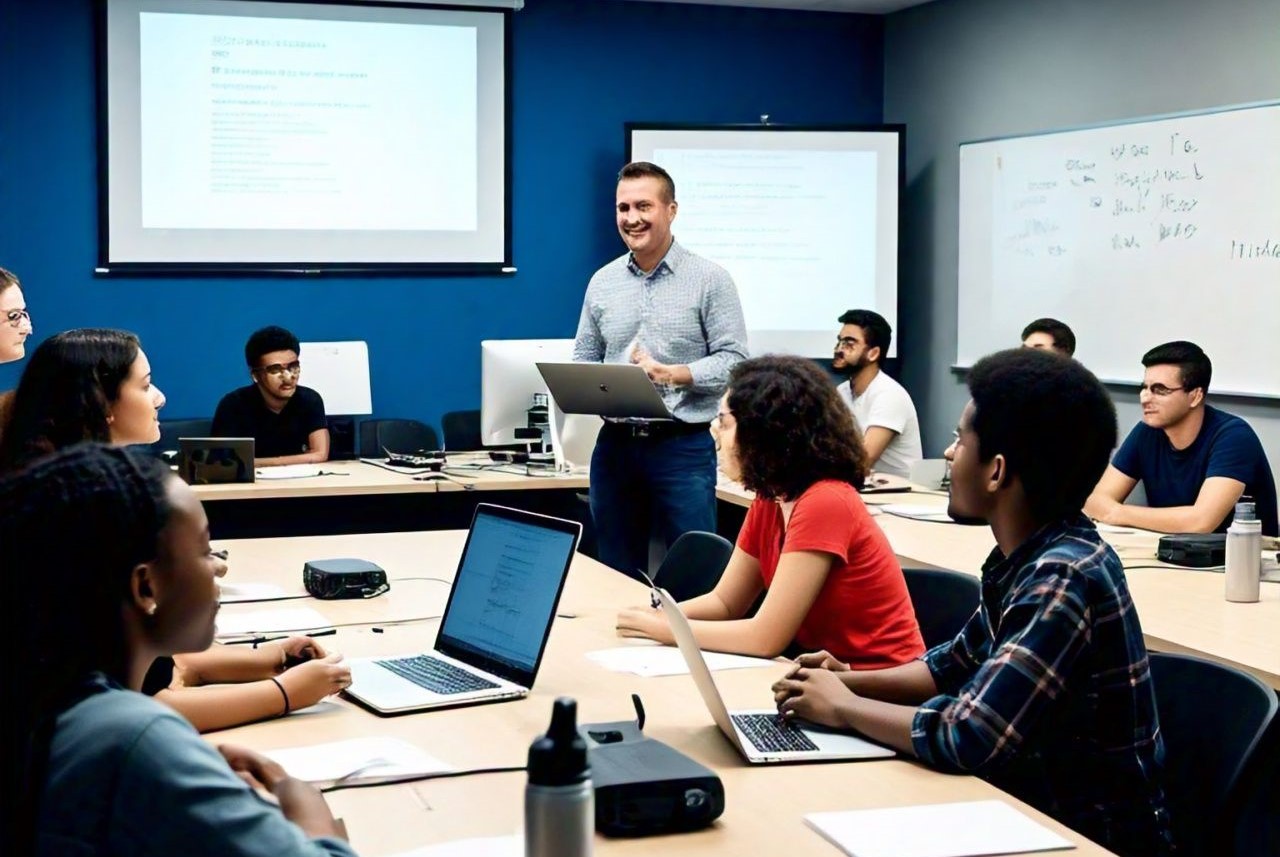
The world of technology is evolving at an unprecedented pace, with new programming languages, tools, frameworks, and methodologies emerging constantly. This rapid evolution presents a challenge for educational institutions, which are traditionally slower to adapt to new trends and technologies. As a result, students often graduate with outdated knowledge, even though they are entering an industry that demands cutting-edge skills. But why is it that colleges and universities don’t focus on teaching the latest technologies? In this article, we’ll explore several reasons why higher education doesn’t always stay on top of the latest trends in technology and what implications this has for students and the industry.
1. Curriculum Design and Approval Process
One of the primary reasons colleges don’t teach the latest technologies is due to the rigid curriculum design and approval process. Academic institutions have to follow a structured process to develop and implement new courses or update existing ones. This process often involves several stages of approval, including review by academic committees, faculty, department heads, and accreditation bodies. As a result, making updates to curricula can take months or even years, making it difficult to keep up with the fast-paced changes in the tech industry.
This issue is compounded by the fact that many universities design their courses around established, widely accepted principles of computer science and engineering, which are timeless and not necessarily dependent on the latest technologies. For instance, concepts like algorithms, data structures, software engineering, and computer architecture form the foundation of computer science education. While these principles are essential for understanding how technology works, they don’t always align with the specific tools and technologies used in the industry today.
Furthermore, integrating new technologies into the curriculum often requires not only the creation of new course materials but also the training of professors. Faculty members may not always have the expertise or time to learn the latest technologies, and some may be more comfortable sticking to tried-and-tested methods. This can delay the introduction of new technologies into the classroom.
2. Limited Resources and Infrastructure
Implementing new technologies in educational settings requires significant resources, both in terms of financial investment and infrastructure. For instance, the latest development tools, programming languages, and platforms often require modern hardware, specialized software licenses, or cloud-based services. Universities may not have the budget to continuously upgrade their computing labs or purchase the latest software, especially considering that many educational institutions are already working with limited resources.
Moreover, newer technologies may require access to cloud platforms or services, which involve recurring costs. Some cutting-edge tools are proprietary, meaning that schools would need to secure licenses to provide access to students. This can be especially challenging for smaller colleges or institutions in developing countries, where budget constraints are more pronounced.
On top of that, new technologies may require substantial changes to the infrastructure itself. For example, transitioning from on-premises servers to cloud-based solutions can require a complete overhaul of an institution's IT systems, which may not be feasible within the constraints of the institution’s budget and timeline.
3. Focus on Fundamentals and Core Concepts
Many educational institutions prioritize teaching fundamentals and core concepts over the latest technologies because these are seen as timeless and essential for long-term success in the tech industry. For example, programming principles, algorithms, data structures, operating systems, and software engineering practices are universally important and are the foundation upon which all future learning is built.
Students who understand these core concepts are better equipped to pick up new technologies as they emerge, even if they weren’t specifically taught those tools in their coursework. The reasoning here is that the ability to learn and adapt is more important than knowledge of specific technologies, which can change quickly. By focusing on teaching students how to think critically and solve problems, colleges believe they are preparing graduates for a lifetime of learning, rather than just for the immediate tech trends of today.
This educational philosophy is often in contrast to industry demands, where employers may be seeking candidates who are proficient in the latest tools and frameworks. While this disparity can create a gap between education and industry needs, many educators argue that focusing on foundational knowledge allows graduates to adapt more easily to new technologies as they enter the workforce.
4. Technological Complexity and Specialization
Some modern technologies are incredibly complex and require specialized knowledge that may be difficult to teach in a standard undergraduate curriculum. For example, technologies like machine learning, artificial intelligence, blockchain, and cloud computing involve highly specialized fields of study that often require additional expertise in mathematics, statistics, or distributed systems. Teaching these topics requires not only specialized instructors but also a curriculum that provides sufficient depth and practical experience.
Introducing highly specialized technologies into general courses may dilute the quality of the education and lead to a shallow understanding of the topic. As such, universities tend to offer specialized tracks or graduate programs for students who wish to focus on these emerging areas, allowing them to gain deeper knowledge in a more structured and appropriate setting.
Furthermore, the sheer number of new technologies being released regularly makes it difficult for universities to select which ones to teach. There are always trade-offs when deciding which technologies should be included in the curriculum. Given the rapid pace of technological change, what may be the latest and most popular tool today could be obsolete within a year or two.
5. Industry Collaboration and Input
While universities may be behind in adopting the latest technologies, many institutions do try to bridge the gap by collaborating with industry partners. However, the reality is that industry needs often differ from academic needs. Companies and startups in the tech industry may be using cutting-edge tools to solve specific business problems, but these tools may not always align with what is being taught in universities. Industry experts may be focused on practical, real-world problem-solving, while academia is often more concerned with theoretical understanding.
Many universities partner with tech companies for research opportunities, internships, and co-op programs, where students get hands-on experience with the latest technologies. This type of collaboration provides students with exposure to real-world tools and practices, but it doesn’t always translate into curriculum changes. Moreover, some companies are more interested in hiring graduates with strong problem-solving skills and theoretical knowledge than those who are proficient in a specific tool that might soon become obsolete.
6. The Gap Between Academia and Industry
A significant challenge in addressing the issue of outdated curriculum content is the gap between academia and industry. The pace of innovation in tech companies is incredibly fast, often outpacing the slow-moving academic world. While industry professionals are working with the latest tools and technologies, universities may still be focusing on tried-and-true methods.
This gap often results in a disconnect between what students learn in the classroom and what they encounter in their first jobs. Industry professionals may feel that graduates are not ready to tackle real-world problems using modern tools, while educators may argue that it’s not feasible to teach every new technology that emerges. Additionally, some companies may be willing to train new hires in the specific technologies they use, so the emphasis in education remains on providing broad, foundational knowledge that is transferable across different technologies and platforms.
7. Education Takes Time
Finally, it's important to remember that education, by nature, is a slower process. New technologies take time to mature, and it’s only after some time that they gain sufficient traction in the industry to become a mainstay in the job market. Universities are slow to adapt because they are focused on providing students with knowledge that will remain relevant in the long run. By the time a technology becomes mainstream, academic institutions are already several steps behind, and it takes time for them to catch up.
It’s not uncommon for students to learn tools that are outdated by the time they graduate, but these tools often have foundational value, teaching core concepts that can be applied to newer technologies. For example, learning SQL may still be beneficial even though NoSQL databases are gaining popularity. Understanding the fundamentals of object-oriented programming remains relevant, regardless of whether the language in question is Python, Java, or some other new language.
In conclusion, the gap between the latest technologies and what is taught in colleges is primarily due to a variety of factors, including the rigid curriculum design and approval process, limited resources, a focus on teaching core concepts, the complexity of new technologies, and the disconnect between academia and industry. While universities may not always teach the most up-to-date tools and frameworks, they do provide students with a strong foundation in the principles of computer science and problem-solving techniques that are essential for success in any tech field.

Comments (0):